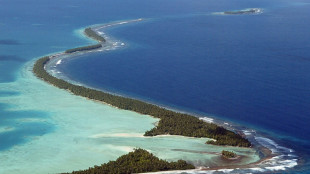
Leaders to visit Pacific atoll at frontline of climate change / Photo: Saeed KHAN - AFP
More than a dozen leaders will head to the Pacific atoll nation of Tuvalu on Tuesday for a first-hand look at a once-vibrant ecosystem wiped out due to climate change.
The getaway comes on the sidelines of the Pacific "pre-COP" gathering hosted by Fiji aimed at drawing the world's attention to life on the frontline of global warming.
The meetings are a precursor to the larger UN-sponsored global climate summit -- known as COP31 -- to be held next month in Turkey.
The South Pacific is among the regions of the world most vulnerable to global warming -- from rising seas jeopardising homes to increasing temperatures causing coral bleaching.
Tuvalu is deeply affected, already laying plans to relocate its population of 10,600 if the country is consumed by the ocean.
Fourteen leaders -- the vast majority from the Pacific -- will touch down there on Tuesday morning.
Accompanied by a small media delegation including AFP, they will be greeted with a traditional ceremony on arrival.
They will then tour the Tuvalu Coastal Adaptation Project, a landmark land reclamation effort that aims to mitigate the impact of rising sea levels.
There will then be a dialogue session, followed by a farewell ceremony.
Tuvalu is one of the world's least visited countries, and the highest point in the capital Funafuti is just two metres (6.6 feet) above sea level.
Rising waters have already largely swamped two of Tuvalu's nine coral atolls, and scientists fear the entire archipelago could be unliveable by the end of the century.
- Direct impact of climate change -
A marine heatwave in 2024 wiped out an estimated 99.9 percent of the coral that built the remote Tuvalu islands.
"You can swim for hours and hours along the reef in the lagoon, just skeleton after skeleton. It's all dead," said marine biologist Austin Bowden-Kerby, who visited last year and documented the devastation.
"The very system that created the islands has died. It wasn't pollution. It wasn't overfishing. Just a direct result from climate change."
Local scientist Rajneel Singh told AFP climate change was already impacting the food sources that have long sustained Tuvalu's population.
"Elders used to fish for red snappers and other things," he said.
"It's no longer frequent in the catch. And the sizes of the fish has been reduced as well."
The country's climate minister, Maina Vakafua Talia, said Tuesday's trip will aim to show life at the forefront of global warming -- and efforts to protect communities.
"Tuvalu is a low-lying atoll nation," he said.
"The decisions we make at Pre-COP and COP31 will be felt by our communities first."
A.Gruber--SbgTB