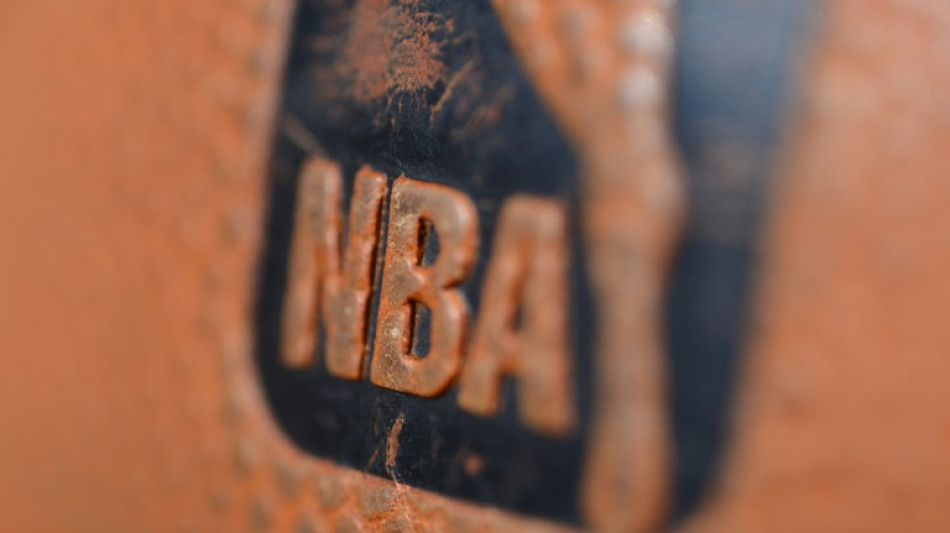
NBA adopts flopping penalty, expands coach's challenges / Photo: Garrett Ellwood - NBAE / Getty Images/AFP/File
NBA team owners approved rule changes on Tuesday creating an in-game flopping penalty and expanded coach's video replay challenge starting next season, the league announced.
The NBA's Competition Committee -– which includes players, coaches, referees, club owners, team executives and representatives from the National Basketball Players Association -- unanimously recommended both changes to the full board of team owners.
The new flopping rule, adopted on a one-season trial basis, says that when a game official calls a player for a flop -- a motion deliberately trying to entice a referee foul call on another player -- an offending player will be issued a technical foul and the opposing team will be awarded one free throw attempt.
A player will not be ejected from a game based on flopping violations.
Referees will not be required to stop play to call a flopping violation, allowing teams with an offensive opportunity to keep going until the game's next natural stoppage.
Referees can call both a foul and a flopping violation on the same play.
While flopping violations are not reviewable under a coach's challenge, they can be called during a referee's replay review triggered by a coach's challenge or a referee-initiated replay review of certain types of called fouls.
The NBA will continue to look at flopping after games, with fines modified to match technical fouls, starting at $2,000 and increasing for repeat offenders.
The coach's challenge change gives teams a second challenge if their first challenge is successful.
Teams must continue to use a timeout to trigger a challenge. They would not be able to challenge without a timeout available.
Teams can continue to keep the timeout after a first challenge if successful but will not retain the timeout used for a second challenge whether or not it is successful.
Y.Androsch--SbgTB