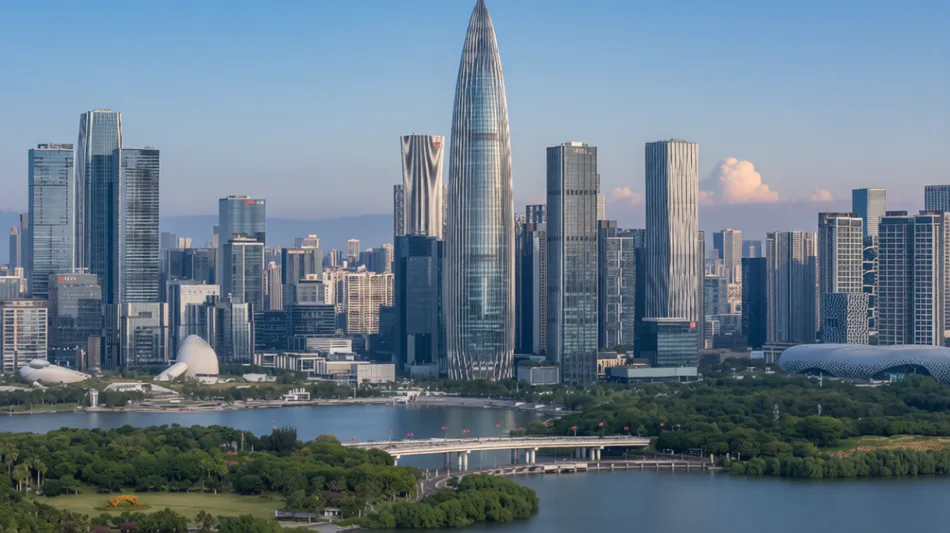
China, Russia, and US Leaders to Hold Historic First Face-to-Face Summit in Shenzhen
The leaders of China, Russia, and the United States are scheduled to convene in Shenzhen this Thursday for a historic face-to-face summit, marking the first time the top officials of the three nations have met directly. Held on the sidelines of the Asia-Pacific Economic Cooperation (APEC) Economic Leaders' Meeting, the gathering aims to strengthen strategic stability and foster dialogue on critical global issues.
The heads of state of China, Russia, and the United States are set to meet in Shenzhen this Thursday for what marks the first direct, face-to-face summit among the top leaders of the three countries in history. The gathering, taking place on the sidelines of the 33rd Asia-Pacific Economic Cooperation (APEC) Economic Leaders' Meeting, is framed by Chinese officials as a critical opportunity to inject certainty into a volatile global landscape and stabilize relations between major powers.
The summit will occur against the backdrop of APEC’s theme, "Building an Asia-Pacific Community to Prosper Together," with leaders from across the region convening in Shenzhen on Wednesday and Thursday. According to Chinese Foreign Ministry spokeswoman Mao Ning, who addressed the upcoming meeting at a news conference on Monday, the three heads of state plan to engage in an in-depth exchange of views focused on maintaining world peace and promoting strategic stability in major-country relations.
Mao emphasized that strengthening communication among the three nations serves the interests of all parties involved and aligns with international expectations. She noted that such dialogue contributes to stabilizing the global situation and fostering cooperation, particularly in a world increasingly characterized by zero-sum game mentalities. The Chinese government views the summit as a means to manage differences and prevent strategic miscalculation by fostering mutual understanding of core concerns and red lines.
As founding members of the United Nations and permanent members of the UN Security Council, China, Russia, and the U.S. share a historical responsibility for global stability, having previously fought together during the World Anti-Fascist War. Chinese state media outlets, including the China Daily, have published editorials highlighting this shared history to underscore the nations' common duty to address contemporary global challenges. The editorial argued that steadfast cooperation among the three powers would send a clear message against efforts to hype "great-power rivalry" or challenge the postwar international order.
The summit addresses a wide array of pressing global issues, including supply-chain stability, regional conflict management, food and energy security, climate action, and public health. Chinese officials assert that progress on these fronts hinges on whether major countries can build mutual trust through dialogue. The complexity of modern technology was also cited as a factor necessitating direct engagement; specifically, the editorial noted that rules for artificial intelligence technologies crossing borders would be ineffective if principal developers refused to engage with one another.
Historical precedent suggests that face-to-face dialogue among top leaders carries profound significance. Such interactions are seen as capable of providing strategic guidance for subsequent working-level exchanges, helping translate consensus into concrete actions. Even on difficult issues where comprehensive settlements remain out of reach, direct leadership contact can help clarify intentions, establish crisis-management channels, and allow space for reciprocal accommodations.
China has positioned itself as ready to shoulder its responsibilities by laying the groundwork for this tripartite engagement. The government views the summit as a chance to reaffirm that coordination among major countries is the correct path to stability, contrasting it with attempts to divide the world into opposing camps. The editorial concluded that the world needs major powers willing to meet each other halfway, offering the Shenzhen summit as proof that such cooperation is possible.
While the meeting represents a significant diplomatic milestone, its outcomes will depend on the willingness of all three parties to translate dialogue into tangible policy adjustments. The summit comes at a time when global stability is increasingly viewed as dependent on the ability of major powers to manage their differences and collaborate on shared threats.
U.Hauser--SbgTB