Belgian PM Bart De Wever Given New Deadline to Resolve €10 Billion Budget Deadlock
Belgium’s coalition government returns to negotiations after King Philippe refused Prime Minister Bart De Wever’s resignation. De Wever has been granted a reprieve until November 16 to address a €10 billion budget shortfall, with party leaders emphasizing the necessity of compromise and economic growth amidst the nation's severe fiscal challenges.
Belgium’s coalition government has returned to the negotiating table after King Philippe rejected Prime Minister Bart De Wever’s resignation, granting him a critical extension to resolve a deepening fiscal impasse. De Wever now has until November 16 to bridge the gap over a €10 billion budget shortfall, launching a new round of bilateral talks with each deputy prime minister.
The political crisis began on November 2 when De Wever tendered his resignation following the collapse of budget negotiations. The King delayed his decision for several days, holding individual meetings with leaders from each coalition party before ultimately refusing the resignation on Friday. In a statement released by the Palace, King Philippe underscored the importance of balancing social cohesion with economic growth. He noted that each party leader had pledged to prioritize compromise and responsibility, formally committing to making concessions to reach an agreement.
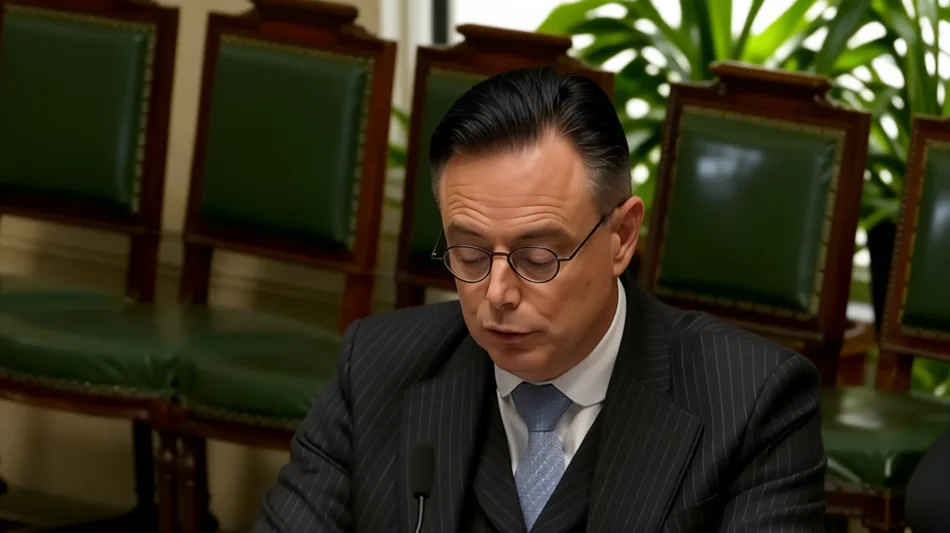
Despite this reprieve, pressure is mounting on De Wever to deliver a solution. Addressing the Belgian Chamber immediately after his meeting with the monarch, the Prime Minister stressed the urgency of the situation. "This can only be done by making difficult choices now, coming to terms with the mismanagement of the past and entering an era of responsibility," De Wever said. He added that he could only serve as Prime Minister of a government that actively pursued this path.
The failure to agree on a budget occurs against a backdrop of deteriorating public finances. According to reports from RTBF, Belgium’s public debt has surged to over €719 billion, equivalent to 110.2% of its gross domestic product. The deficit is projected to reach approximately €33 billion by 2026.
Georges-Louis Bouchez, president of the liberal MR party, argued that calling an election would be "completely irresponsible" given the country's budgetary situation. He pointed out that with €348 billion in annual public spending, finding an additional €10 billion is a reasonable expectation. "The idea that we cannot find 10 billion out of that 348 billion is simply not reasonable," Bouchez stated.
Bouchez also highlighted a shift in the government's focus, noting that the Palace’s emphasis on stimulating economic growth aligns with long-standing MR demands. "What stands out to me most in the Palace’s statement is the emphasis on the need to stimulate economic growth — a point the MR has frequently raised, often while standing alone," he said. "I now see that this has become a core part of the government's mandate."
Other coalition leaders expressed readiness to resume work. Deputy Prime Minister David Clarinval stated he was satisfied that the message regarding economic growth had been heard and declared himself ready to begin working on a project as soon as possible. Similarly, Maxime Prévot of Les Engagés noted satisfaction that the King had received assurances from all majority party leaders regarding their commitment to a swift outcome. "I am in the starting blocks, ready to resume negotiation meetings the moment the prime minister calls us together," Prévot said.
The deadline of November 16 marks a pivotal moment for Belgian politics, as the coalition must now demonstrate its ability to govern effectively despite significant economic headwinds and internal disagreements over fiscal policy.
G.Gaertner--SbgTB