Brazil's Lula wins fourth term, Bolsonaro seeks to annul result
Brazil's leftist President Luiz Inacio Lula da Silva was re-elected against all expectations on Sunday, but his conservative rival Flavio Bolsonaro refused to accept the loss and said he would seek to have the vote annulled.
Lula's dramatic comeback meant Brazil had not followed Argentina, Chile, Colombia and Peru, all backed by US President Donald Trump, in swinging to the right.
EU chief Ursula von der Leyen hailed Lula's re-election as a triumph for "democracy and multilateralism", joining a slew of world leaders who welcomed the leftist figurehead's return for an unprecedented fourth term.
Lula, who turns 81 on Tuesday, defied projections to defeat Bolsonaro, a senator and the son of jailed former far-right president Jair Bolsonaro, and win an unprecedented fourth term.
According to official results, he won 51.8 percent of the votes to 48.2 percent for Flavio Bolsonaro, with Lula pulling around 4.4 million more votes.
Lula was warmly congratulated by the leaders of left-wing governments across Central America, including Mexico, Cuba and Venezuela.
"Long live democracy, the people of Brazil won," Mexican President Claudia Sheinbaum said on X.
Right-wing governments in Chile, Ecuador and Peru said they wanted to work towards common goals with the region's economic powerhouse.
China echoed that sentiment, while Indian Prime Minister Narendra Modi also offered his friend Lula his "heartiest congratulations."
- 'Ensuring democracy' -
Fireworks and vuvuzelas rang out in Rio de Janeiro, while thousands of people dressed in red, the color of Lula's Workers' Party, streamed into the streets of Sao Paulo to celebrate.
"People went to vote because we managed to convince them that voting was very important for ensuring democracy in the country," Lula said in his first comments after the win.
Sunday's vote was marked by confusion after a Supreme Court ruling extended voting by two hours because some polling stations had already closed.
The move came at the request of Lula, who complained that buses had been pulled from circulation in various cities, barring citizens from voting.
Flavio Bolsonaro also requested an extension in some regions due to heavy rains, but he described the decision as "unacceptable" and a "dirty trick."
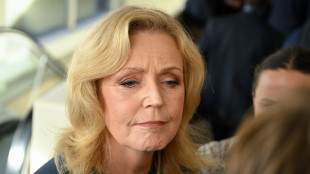
"It is impossible to recognize the results. I am going to request the annulment of these elections," he said, stone-faced, in a brief speech in Brasilia.
Bolsonaro's father is serving a 27-year jail term for attempting a coup after his loss to Lula in the country's last election in 2022.
No candidate who lost the first round has gone on to win the second in Brazil since 1989, the first direct election after the end of the country's military dictatorship.
- Lula's fight back -
Brazil's left swung into action with massive rallies after Lula's first-round defeat, declaring "Never Again Bolsonaro" and revamping their social media strategy.
Julio Canelo, 42, a lawyer celebrating in Rio de Janeiro hailed a victory for "the entire democratic spectrum."
"It was the result of the people mobilizing, in the streets and online," he told AFP.
A fierce social media battle drew in Meta, parent company of WhatsApp, Facebook and Instagram, which Lula's campaign accused of favoring his opponent with "algorithmic manipulation."
Meta denied this but acknowledged that some of Lula's campaign ads had been mistakenly deactivated due to technical errors.
"We are going to have to regulate them," Lula said of social media companies after his win.
A bitter campaign marred by scandals and mudslinging laid bare the deep divisions that have plagued Brazil over the past decade.
- 'In a deep hole' -
Lula heads into a fourth term with almost half of the nation having rejected him, desperate for change.
He rose from poverty to become president in 2003 and was re-elected in 2006.
Lula made a dramatic return to office in 2022 elections after a corruption scandal saw him jailed for over 18 months before the charges were annulled on procedural grounds.
Lula oversaw a drop in inflation and unemployment in his third term, and lifted millions out of hunger, but many voters felt gloomy about the high cost of living and crime.
Flavio Bolsonaro, 45, pitched himself as more moderate and jovial than his father and galvanized conservatives, as well as less ideological voters wanting something new.
"We're in a deep hole, things are dire. People can barely afford to eat -- buying meat is out of the question," said 68-year-old retiree Tereza Cristina Ramos, who voted in Rio de Janeiro.
He also faces a hostile Congress dominated by the right.
P.Wimmer--SbgTB