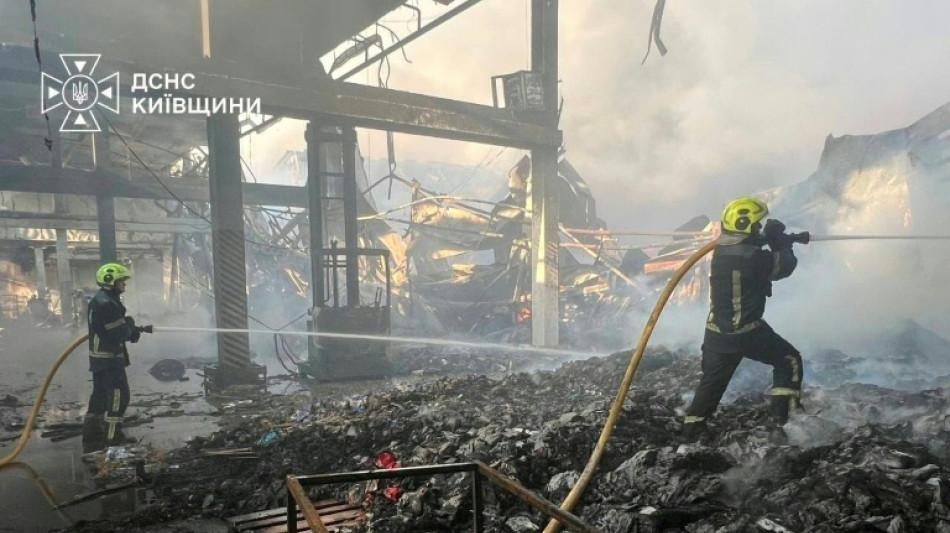
Kyiv's defences, 'hybrid' threat from Moscow headline EU talks / Photo: Handout - State Emergency Service of Ukraine/AFP/File
EU defence ministers grappled Tuesday with bolstering Ukraine's air defences, as worries grow over Russia's campaign to destabilise Kyiv's European backers.
Moscow has taken advantage of Ukraine running low on US-built air defence missiles to pummel the country, while Kyiv has hit back against Russian infrastructure with its own long-range strikes.
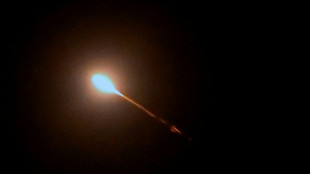
A barrage of Russian drones and ballistic missiles killed at least 12 people in Kyiv and its region overnight Monday to Tuesday, according to Ukraine, just as children were to return to school after the summer.
"Russia is really escalating to hurt the people of Ukraine as much as possible, to break them," EU foreign policy chief Kaja Kallas told journalists as two days of talks kicked off in the Irish town of Wicklow.
Defence ministers -- who met on Tuesday before EU foreign ministers hold their own talks Wednesday -- were set to speak to Ukraine's new acting defence minister Yevgeniy Khmara.
But there appears to be little they can do to massively increase the supply of desperately needed air interceptors to Ukraine -- beyond pressuring European countries that still have stockpiles and urging the likes of Japan and South Korea to share more.
"We know that some of the countries have interceptors that will expire soon. So it would be very good if those would be given to Ukraine," Kallas said.
While the Kremlin escalates its air campaign against Ukraine, there have been growing worries that Moscow is also looking to deflect from its battlefield troubles by ramping up so-called "hybrid" operations in Europe.
German Chancellor Friedrich Merz said his country had increasingly "found itself in the crosshairs of hybrid attackers" after an explosive-laden drone was found in August at Leipzig airport, a crucial military transport hub.
Berlin has not yet officially blamed Russia over the incident -- but the clear suggestion is that the finger of blame is pointing at Moscow.
Fuelling the concerns over Russia's intentions, CIA chief John Ratcliffe paid a surprise visit to Moscow last week, with US media reporting he warned Russia against attacking any NATO country.
EU officials insist they do not believe Moscow is preparing for a military attack any time soon -- but they are bracing for more incidents in the grey zone beneath open conflict.
"They are testing always this threshold -- where is this red line," said Estonian defence minister Hanno Pevkur.
"But we also keep our heads very clear and calm, and will not overreact to that, when it's not a military attack."
While Merz said those behind the incidents in Germany will "pay for them", Europe has struggled to counter the low-level campaign of sabotage and interference it blames on Moscow.
- Sanctions, assets, reforms -
Beyond ramping up intelligence sharing and police cooperation, the EU is trying to raise the cost of the war for the Kremlin by bolstering support for Ukraine and hitting Moscow with sanctions.
Brussels has floated fresh plans to add 1,600 more firms and individuals to its already long list of Russians sanctioned over the war.
Meanwhile discussion has resurfaced on whether the bloc should tap some 200 billion euros ($235 billion) of frozen Russian central bank assets to fund Ukraine.
A proposal to use the funds failed last year after opposition from Belgium, where the bulk of the assets are held, and the EU came up with a 90 billion euro loan for Kyiv off its own back.
But there is already a sense that the money might not last the two years it was intended for and the EU may need to find a way sooner or later to use the immobilised Russian funds.
"As each day passes, the cost of the war is rising," the top diplomats of the Netherlands, Poland, Spain and Sweden wrote in a letter last week.
New British foreign minister Ed Miliband and Ukraine's Andriy Sybiga will join their EU counterparts for the talks, taking place in Ireland since it holds the bloc's rotating presidency.
But while crises rage around the globe from Ukraine to Iran, the EU ministers will also open a debate on reforming how the bloc runs its diplomacy as it seeks impact in an increasingly hostile world.
While some are advocating to overhaul the EU's diplomatic service under Kallas, others say now is not the time for institutional reshuffling.
K.Zehetner--SbgTB