In shadow of Iran war, Gazans prepare for Eid / Photo: Omar AL-QATTAA - AFP
For the first time since war began in Gaza, Raeda Abu Diya has bought special clothes for her daughter for the upcoming Eid al-Fitr holiday, marking the end of the Muslim holy month of Ramadan.
Bu while a fragile ceasefire now holds in the Israel-Hamas war, Palestinians in Gaza fear the Iran war will make the world forget their suffering, and lead to prolonged shortages of crucial aid.
"This year I decided that my children and I would be happy and celebrate with what is available to us," 38-year-old Abu Diya, who lives with her daughter and husband in a tent after their home was destroyed, told AFP.
"The shelling is much less than before."
Her 15-year-daughter Fidaa is thrilled, proudly detailing the new jeans, T-shirt and jacket her mother got her to mark the holiday.
She still misses her old room filled with all her belongings.
But she hopes the upcoming celebration will mark the "beginning of the return of the sweet life to Gaza".
While the family hopes to make the most of the Eid al-Fitr, which should come either Thursday or Friday depending on the moon, her mother is worried that the US-Israeli war with Iran has drawn focus away from their plight.
With nearly all of Gaza's 2.2 million residents forced from their homes during over two years of war sparked by Hamas's attacks on Israel, many people still live in tents or makeshift shelters in enormous camps, facing shortages as well as persistent fear and uncertainty.
"Gaza is now forgotten and the world ignores the suffering of its people," Raeda Abu Diya said.
Each day she is glued to the latest news of the Middle East conflict from local radio stations that recently resumed broadcasting.
It is not just the current events that weigh upon her: the memory of relatives -- including her brother -- killed by Israeli strikes, is always with her.
"We are trying to create a little joy, but sadness does not leave us," she said.
The truce in place since October between Israel and Hamas has seen the level of violence drop in Gaza -- even though there are still regular reports of Israeli strikes and deaths.
The Israeli army, which under the terms of the ceasefire still controls about half of the Gaza Strip including all border areas, reported its troops killed three Palestinian fighters in one strike and one firefight in Gaza Saturday.
It reported killing six more Hamas fighters in a single strike in central Gaza Sunday.
- 'Tired of war' -
For other Gazans, the upcoming holiday only compounds the difficulties they're already facing.
Ammar al-Buhaisi, who lives in Deir al-Balah, is struggling to get enough food, let alone new clothes for his children -- and has been avoiding their expectant questions.
As the US-Israeli conflict with Iran engulfs the region, he said any "optimism for an improvement in the situation is diminishing".
Hussein Duwaima, whose original clothes shop was destroyed, said life was coming back "gradually" in Gaza and demand has picked up ahead of the holiday as crowds of shoppers pack makeshift markets.
Due to a lack of supply caused by the closure of Gaza's borders and steep transportation costs, the prices are high.
A child's shirt for example costs the equivalent of between $15 to $30, while a kilo of chocolates can be even pricier.
Israeli forces completely or partially destroyed most of Gaza's markets during the war, though the market in Gaza City's Sheikh Radwan neighbourhood has been partly restored already.
Imad al-Bahtimi plays Eid chants on a loudspeaker at his stall to help "attract children and spread joy among the people".
Hamas police officers have deployed again at markets and on the streets of Gaza since the start of the ceasefire.
"It increases a sense of security," Bahtimi said.
Hossam al-Shafa received Eid clothes and sweets for his three children from a local charity.
He said that Israel still bombs eastern areas of nearby Khan Younis on a regular basis, demolishing homes.
"We are tired of war and destruction," he said.
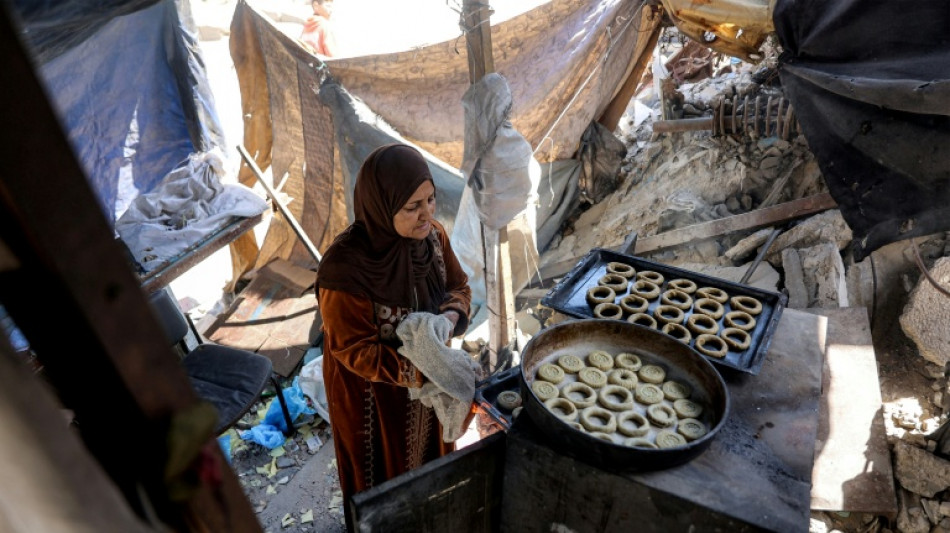
Despite the ongoing dangers he and his wife are trying their best to create a festive atmosphere, gathering firewood to bake cakes on their stove.
"These are the best days we have had since the war began," he said.
A.Mayrhofer--SbgTB