'Many dead': Wounded survivor escaped Kabul clinic strike / Photo: Wakil KOHSAR - AFP
Azmat Ali Momand had just finished his rounds, checking patients at the "Camp Omid" drug rehabilitation centre in the Afghan capital, Kabul, when the explosion erupted.
"The room collapsed on me," the 30-year-old doctor, who has worked at the centre for two years, told AFP on Tuesday. "I got two stitches on my head and my leg was also injured."
Momand was knocked out by the blast but after coming to, he went to the emergency ward where others wounded in the strike were arriving.
"I gave them first aid. They were severely injured and then transferred them to the relevant hospitals," he added.
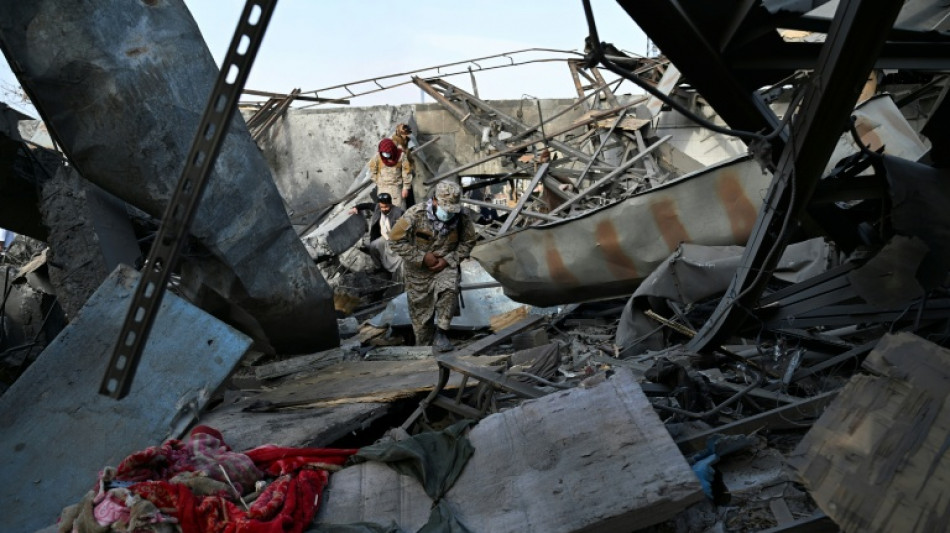
"There are many dead, but we don't know how many," he said at the scene of the blast, which left the building in ruins, blackened and still smouldering in the daylight.
An AFP team at the scene soon after the centre was hit on Monday night saw at least 30 dead bodies and dozens of wounded being taken away.
The Afghan authorities, who said Pakistan deliberately targeted civilians, indicated that several hundred people may have been killed but the exact toll was not yet known.
Pakistan maintains that it carried out precision strikes on "military installations and terrorist support infrastructure" in its battle with the Taliban government, which it accuses of harbouring extremists who have targeted its border regions.
- No information -
Rescuers carried the dead and wounded from the devastated building on blankets due to a lack of stretchers and dozens of ambulances took turns for much of the night taking casualties to hospitals.
The search for survivors carried on into Tuesday, when daylight showed the extent of the damage: a collapsed roof, shattered chairs and pieces of hospital beds as well as blankets and even human remains.
"All the people have not been pulled out yet from under the rubble," said interior ministry official Sheikh Abdul Rahman Munir.
At the scene, nurses wept in a corner: "What has happened to our colleagues?"
Momand said there were 2,000 beds at the centre, which treated patients addicted to marijuana, amphetamines or other synthetic drugs.
"They were in different buildings, 200 to 300 in each," he said, adding that four of the five buildings had been destroyed.
Crowds of men and women gathered in front of the centre, trying to get news of their loved ones.
"My brother was here in the camp," said Mohammad Daud, 28. "I wanted to check on him. We came at 12:00 am and were here until 3:00 am.
"They do not give us any information and do not let us go further either."
Daud's brother had been at the centre for more than a month but believed he was in a building where fire did not break out.
"I think he is OK," he added.
E.Mader--SbgTB