Southern Africa Malaria Surge Highlights Gap Between Data and Action
Malaria infections are surging across Southern Africa following severe flooding earlier this year, with significant case numbers reported even in regions where the disease is not typically endemic. Health authorities warn that while scientific knowledge of transmission risks has improved, the critical challenge remains translating this data into timely, accessible public health interventions.
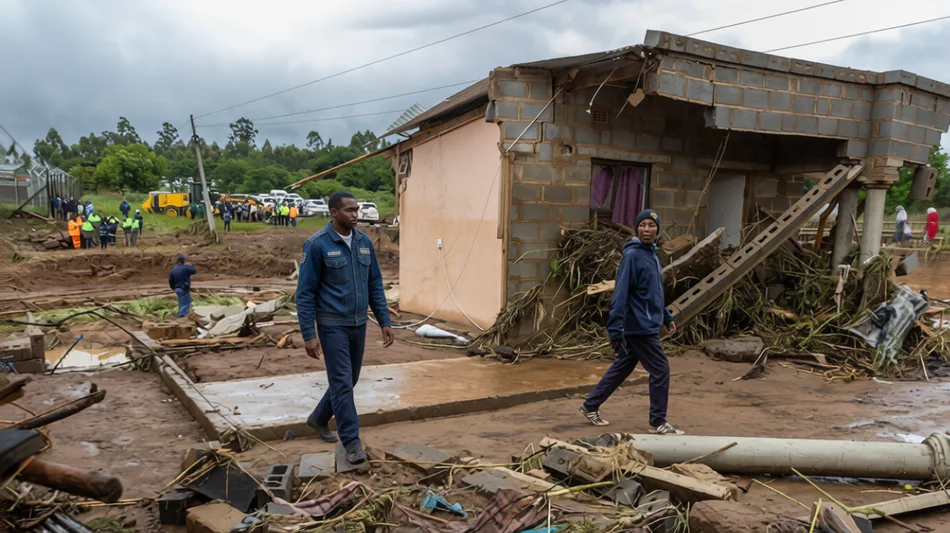
Malaria cases have risen sharply across Southern Africa in the months following severe flooding earlier this year, a trend that highlights the complex relationship between environmental conditions and disease transmission. The surge has been particularly notable in regions where the disease is not typically endemic, demonstrating how shifting ecological factors can alter risk profiles far beyond traditional boundaries.
In Gauteng, a province where malaria is not endemic, health authorities reported 414 cases and 11 deaths during the first three months of 2026. Most of these infections were linked to travel to areas with active malaria transmission, illustrating how population mobility can introduce the disease into new settings. The data reveals that changing transmission conditions have consequences that extend well beyond the immediate geographic areas where outbreaks occur.
The relationship between climate and malaria is intricate. While rainfall can create breeding grounds for mosquitoes, flooding may also destroy existing habitats, disrupt health services, and displace communities. The impact of these environmental shifts depends on local circumstances and a variety of interacting factors, including human behavior, healthcare access, and the capacity of health systems to respond.
Across the region, people routinely travel between areas with different malaria transmission levels for employment, trade, tourism, and family responsibilities. Infections acquired in endemic areas may only be recognized after travelers return to non-endemic regions. In these settings, healthcare professionals may not immediately consider malaria when patients present with fever or other non-specific symptoms, potentially delaying diagnosis and treatment.
Southern Africa has made considerable progress in malaria control and elimination over recent years. However, sustaining these gains is increasingly challenging due to changing rainfall patterns, extreme weather events, population mobility, insecticide and drug resistance, and financial pressures. These factors collectively influence the region’s ability to prevent and control the disease.
Scientific advances in parasite biology, mosquito behavior, transmission dynamics, and environmental influences continue to create opportunities for improved prevention and control. Research into parasite biology helps identify vulnerabilities that may inform future treatments, while understanding mosquito ecology supports more effective vector control approaches. These insights are increasingly complemented by environmental intelligence through initiatives such as the Remote Sensing for Malaria Control in Africa programme.
Integrating environmental, biological, and epidemiological information could help malaria programs anticipate changing conditions, strengthen surveillance, and target interventions more effectively. However, sophisticated information has limited value if it does not reach decision-makers or translate into interventions that can be implemented, sustained, and accessed by those who need them.
The challenge is no longer only about generating knowledge but ensuring that knowledge informs action. Malaria is preventable and treatable, yet people continue to become seriously ill or die because they do not recognize their risk or seek medical attention in time. The 2026 increase in travel-associated malaria cases demonstrates why communication must extend beyond endemic communities.
Travelers need to understand their exposure, while healthcare professionals in non-endemic settings must remain alert to malaria in patients with relevant travel histories. While traditional awareness campaigns remain important, approaches must be adapted to reach different audiences and respond to their beliefs, experiences, and realities.
Creative collaborations have been used to engage communities beyond conventional scientific platforms. A recent collaboration with the University of Pretoria’s School of the Arts saw undergraduate music students develop malaria-inspired compositions. Other collaborations with the department of consumer and food sciences in 2025 and 2026 demonstrated how food can be used as a creative tool to raise awareness. Previous efforts included drama-based communication for young children and visual art platforms during the pandemic.
Awareness must be accompanied by access to services. The regional call for “Timely Access to Malaria Services, Everyone’s Right” emphasizes that people cannot act on health information if prevention, testing, or treatment remain inaccessible. Translating evidence into action requires effective leadership and management, as malaria programs face competing priorities, limited resources, and changing conditions.
Success depends on interpreting evidence, coordinating responses, managing resources, and working across disciplines and institutional and national boundaries. Over the past five years, the Advanced Leadership Programme for the Elimination of Malaria (Alpem), delivered through the University of Pretoria’s Institute for Sustainable Malaria Control, the Gordon Institute of Business Science, and other partners, has supported leadership and management capacity development among malaria professionals from nine Southern African countries.
The experiences of 2026 reinforce an important lesson: malaria elimination cannot be achieved through isolated interventions or scientific advances alone. Environmental intelligence must inform preparedness, research must support practical interventions, health promotion must connect with communities, and leadership must translate evidence into coordinated, sustained action.
For Southern African Development Community (Sadc) countries, this requires stronger regional collaboration, recognition of different national and community needs, and a shift towards anticipating risks rather than responding only after crises occur. The Zero Malaria Starts with Me campaign reminds us of individual responsibility, but achieving zero malaria also requires governments, researchers, healthcare professionals, malaria programs, and communities to work together, supported by accessible services and resilient health systems.
As the region commemorates Sadc Malaria Day on November 6, there is an opportunity to advance shared regional health priorities, including malaria elimination, cross-border surveillance, sustainable health financing, and coordinated responses to emerging health threats. The focus must be on ensuring that existing knowledge reaches the right people, informs the right decisions, and leads to meaningful action.
Knowing more about malaria is important, but what makes the difference is how effectively that knowledge is put to work. The region has the tools to predict risk and save lives; the challenge lies in bridging the gap between insight and implementation.
J.Hochholzer--SbgTB