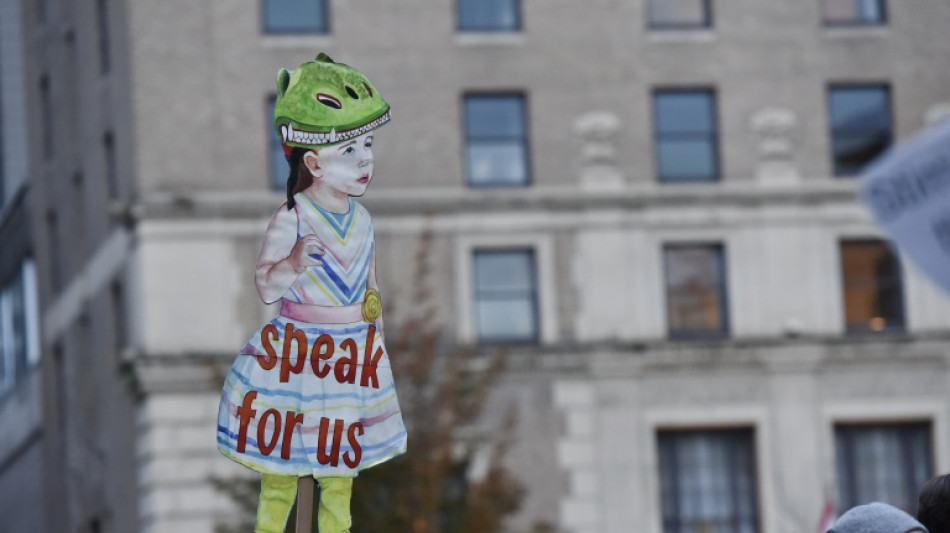
Young Canadians focus on mental health at key climate trial / Photo: Don MacKinnon - AFP/File
At a landmark Canadian trial focused on the government's obligations to fight climate change, the young plaintiffs suing Ottawa over alleged policy failures have sought to focus attention their mental health.
In the civil trial that opened in the west coast city of Vancouver on Monday, 15 Canadians aged 17 to 25 are asking the court to impose legally binding greenhouse gas emissions targets on the federal government.
The case is unprecedented in Canada and part of a growing global movement by environmental activists seeking to use courts to force stronger climate protections.
Lawyers for the plaintiffs have said that part of their case hinges on proving the consequences of climate change are not hypothetical future risks, but that Canadians are already suffering.
In testimony this week, child and adolescent psychiatrist Elizabeth Pinsky told the court that young Canadians, including those affected by devastating wildfires, have experienced depression, anxiety and post-traumatic stress disorder.
She cited a condition called "eco-anxiety," which she defined as "a category of psychological harm that has to do with anger, a sense of betrayal."
- 'A scary world' -
Montreal resident Albert Lalonde, a plaintiff in the case, testified that although he loves being outside on his bike, he stayed indoors more often this summer because of "chokingly toxic air" caused by wildfires.
He recalled feelings of "betrayal" after concluding that he was no longer safe outside.
"I just no longer expect anything from governments," he told the court, mentioning policy moves by Prime Minister Mark Carney including the removal of a carbon tax on consumers.
Leandrea Reeves, another plaintiff, testified about a broader sense of loss and said she feels "disadvantaged" because climate-linked extreme weather events are limiting her experiences.
Lauren Wright from the central province of Saskatchewan lived through 2015 wildfires that displaced thousands.
Wright told the court about the "profound sense of calm" the outdoors provides.
But the 22-year-old testified that enjoying the outdoors and working as a farmer have been restricted by heat-related illnesses.
A 2022 Canadian health ministry report noted that "climate change disproportionately and inequitably affects the mental health" of certain groups, including youth.
Pinsky testified that concerns about the climate were fueling a general trepidation about the future among young Canadians. Forty percent of youth are unsure whether they want children because of global warming, she said.
"It is a scary world. I struggle to think about what the future holds," plaintiff Saj Starcevich testified, crying as she voiced doubts about becoming a parent, something she had previously dreamed of.
The plaintiffs argue that successive Canadian governments have failed to protect their rights to life and security through insufficient action on climate change.
But government lawyers counter that climate change is a global problem and that even if a court order bound Ottawa to certain emissions targets, it still would not protect Canadians from the harms of climate change.
C.Wieser--SbgTB