Russia rights group boss fears post-election crackdown / Photo: Fabrice COFFRINI - AFP
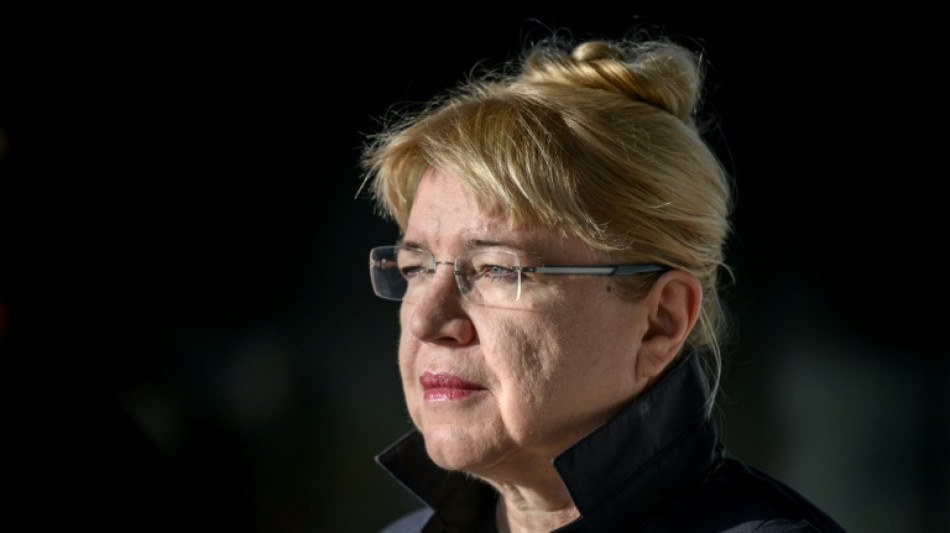
The head of Memorial, Russia's Nobel Peace Prize-winning rights group, has told AFP she fears a fresh crackdown after September's legislative elections, with more people arrested and sent to fight in Ukraine.
Speaking in an exclusive interview in Amsterdam, Elena Zhemkova also vowed to keep up the fight for human rights in Russia, despite her group being declared illegal and herself forced into exile.
"Unfortunately, I think that now everything is getting worse, but not so fast," the 65-year-old said. "But after the elections, there will be a very sharp deterioration."
Last month, Russia's Supreme Court banned the only anti-war party, Yabloko, from running in the elections, where opposition to President Vladimir Putin will be minimal.
"More people will be arrested for insignificant things and sent to prison. They are interested in sending people to prison. For them prison is a way to the front (line in the war against Ukraine)," she said.
"The situation at the front is very fragile."
Memorial was founded in the late 1980s to document victims of Soviet-era political repression during which millions of people perished in the Gulag penal system.
Earlier this year, a court labelled the group "extremist", making its supporters subject to prosecution and effectively outlawing any cooperation with it.
Memorial group received the Nobel Peace Prize in 2022 -- months after Russia launched its offensive on Ukraine -- alongside jailed Belarusian activist Ales Bialiatski and Ukraine's Centre for Civil Liberties.
Zhemkova herself has fled the country and keeps the organisation running from Berlin where she acts as executive director.
"The more they try to silence or erase the name of Memorial in Russia, the louder it will sound outside Russia," she promised.
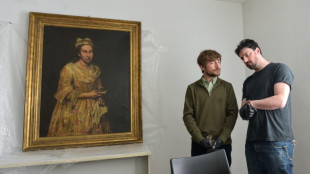
Zhemkova was speaking on the sidelines of an exhibition entitled "Artists Against the Kremlin: Memory Remains", at the De Balie cultural centre in Amsterdam.
The exhibition features work from artists forced into exile, silenced or persecuted and Zhemkova said it was a good example of Memorial's work outside Russia.
"If we don't understand and take lessons from the past, we will repeat mistakes and our present and future will be terrible," she said.
- 'Sophisticated propaganda' -
With Russia apparently escalating its offensive in Ukraine and testing Western unity with "hybrid" attacks in Europe, Zhemkova urged a strong response.
When Europe hesitates, Putin "sees this as weakness," she said.
"And for Putin, what does weakness mean? It means that victory is around the corner and we need to push further," said Zhemkova.
She highlighted what she described as a "huge repressive mechanism" in Russia and "very powerful and sophisticated propaganda."
She pointed to a plan to replace Moscow's Gulag museum with a new exhibition documenting Nazi crimes against the Soviet Union during World War II, the latest move in a crackdown on institutions documenting Soviet-era repression.
"It's only a part of what they do," she said, referring to the museum.
"Unfortunately, the process of rewriting history is much bigger, much deeper. It's also the destruction of monuments," said Zhemkova.
The human rights leader said she felt safe in Berlin, despite being distanced from friends and home and her family, which she said was now disbursed over eight countries.
"That's the reason why our meeting point is Zoom every week," she laughed.
And despite the situation in Russia seeming to get worse by the day, she said she still feels hopeful.
"We are trying to explain that not everybody turned into criminals. That there is another Russia. Even now," she told AFP.
She said what gives her hope is the bravery of her fellow campaigners and the creative protests of artists such as those exhibiting in Amsterdam.
The objects in the exhibition often tell a sad and tragic story of repression, she said.
"And on the other hand, the other side of the object is always a story about solidarity, love, friendship, family."
burs-ric/db
L.Sailer--SbgTB